
You updated the resume. Adjusted the cover letter. Applied to roles that genuinely match your experience. Then nothing. No recruiter call, no email, just the automated “we received your application” and silence after.
Most people blame themselves at that point: not senior enough, someone had a stronger profile, the resume wasn’t good enough. Sometimes that’s true. But I spent a while digging through the hiring data and the story is messier than the one the career-advice industry sells you. A lot of qualified candidates get filtered out for reasons that have nothing to do with whether they can do the job. And the single biggest one isn’t the robot everybody’s scared of.
The odds got a lot worse, and not because candidates got worse
Employers received an average of 250 applications per job posting in 2024, according to HiringThing. Entry-level roles regularly clear 400. Meanwhile the application-to-interview ratio fell to 3% in 2024, down from 8.4% in 2023 and 15.25% back in 2016. That’s roughly a fivefold drop in eight years.
Candidates didn’t get five times worse. What changed is the cost of applying. “Easy Apply” buttons, remote roles opening up the geographic pool, and AI tools that spit out a tailored resume in thirty seconds all made it nearly free to fire off more applications. Volume flooded in. Interview slots didn’t grow to match. So the funnel you’re competing in today is structurally different from the one you competed in five years ago, and a lot of advice from back then quietly stopped working.
The 75% ATS rejection stat is fake, and the real problem is worse
If you’ve read any job-search advice, you’ve seen the line: “75% of resumes are rejected by an ATS before a human ever sees them.” It’s everywhere, and it traces back to a 2012 sales pitch from a resume-optimization startup called Preptel that was out of business by 2013. No study. No methodology. No survey. Just a number that sold software.
When someone finally checked, the picture flipped. Enhancv interviewed 25 US recruiters in late 2025 and found that only 2 of them — 8% — had their ATS set up to auto-reject based on resume content or match score. The other 23 route every application to a human, using the ATS to rank and sort, not to silently trash your resume. The hard gates that do exist are knockout questions the employer sets, like work authorization or a minimum years-of-experience bar, not some algorithm reading your bullet points and deciding you’re unqualified.
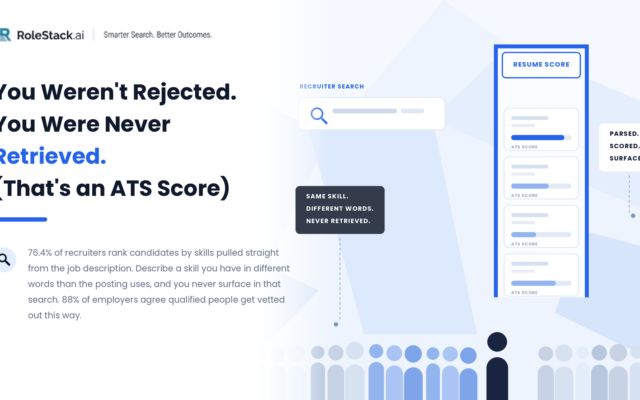
So the machine mostly isn’t the problem. A human is, and in some ways that’s worse. When a recruiter has 250 applications sitting across several open roles, they’re ranking fast under real time pressure, and the average resume gets well under a minute. A two-column layout that parses weird, skills phrased differently from the posting, a creative job title nobody searches for, relevant experience buried under a generic summary — none of that gets auto-rejected. It gets deprioritized by a tired person moving quickly, which produces the same silence and feels identical from your side of the inbox.
That distinction matters because it changes what you fix. You’re not trying to beat a keyword robot. You’re trying to be instantly readable and obviously relevant to someone skimming a pile.
Timing creates an edge most applicants never account for
Recruiters don’t wait for all 250 applications and then start reading. Most begin screening within 24 to 72 hours of a posting going live, and shortlists form fast. By the time the count crosses 200, plenty of recruiters are already in conversations with people they like. One analysis of application timing found submissions in the 8–11 AM window pull around 30% higher response rates than ones sent after 5 PM. Treat the exact figure as directional, but the first wave of applicants clearly gets attention the later wave never sees.
Then there’s a latency problem nobody applying for jobs thinks about. A role usually goes live on the company careers page first. LinkedIn indexes it after a delay that runs anywhere from a few hours to a day depending on the ATS integration, then batches its alert emails on top of that, so a LinkedIn notification can reach you a full day after the job was already discoverable. Indeed crawls postings with a similar lag.
Stack those up and two candidates with identical experience and identical resume quality can land in completely different spots in the pipeline based purely on when they found the role. One applied from the careers page on day one. The other got a LinkedIn alert two days later and applied into an already-crowded queue. The difference there isn’t talent; it’s information latency, and it’s invisible to the person on the losing end of it.
What the tailoring data actually shows
Tailoring is the one piece of conventional advice that mostly survives contact with the data. A study of 15,000 applications found tailored resumes hit an 11.7% callback rate against 4.2% for generic ones, close to 3x. Resumes matching under half of a posting’s keywords rarely survive the initial screen even when a human is doing the ranking.
The mechanism is dull but real. A recruiter scanning for a product manager doesn’t mentally translate “drove revenue growth” into “owned P&L and GTM.” They’re pattern-matching for their own language because that’s what reads as fit in a hurry. Tailoring is a translation layer that makes genuine experience legible to someone scanning fast. It can’t invent experience you don’t have, and a careful reader catches it when someone’s reaching. But when the real experience is there and just buried under generic phrasing, tailoring is often the difference between surfacing and getting lost.
The catch: every edge here erodes as it spreads
The uncomfortable second-order effect is that all of this decays the moment it becomes common knowledge. When everyone applies within 48 hours, “early” gets redefined to “within the hour.” When everyone mirrors keywords, ranking scores compress and stop separating people. When AI makes tailoring instant and free, the baseline rises and recruiters get better at spotting the sameness, so the tailored resume that stood out last year now reads like all the others.
You can already see it in the numbers. Interview rates fell from 8.4% in 2023 to 3% in 2024. Some of that is the market, and some of it is AI-assisted applications flooding the top of every funnel with better-optimized but less differentiated resumes. More polish, less signal.
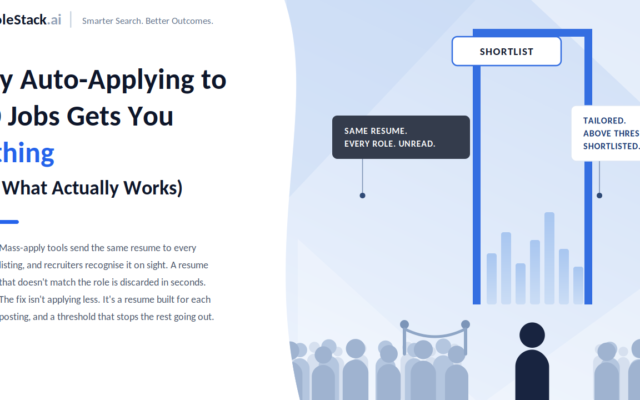
Which points at the actual move, and it isn’t a slicker resume. It’s targeting: fewer, better-matched applications instead of blasting 500. A hundred well-fit applications beat 500 generic ones, and probably beat 500 AI-tailored ones too, because eventually the human on the other end notices everything looks the same. Get a solid, clean resume built once, then find the right roles early and apply while the pile is still small. Clean formatting, single column, no tables or graphics that break on import, standard section headers so a fast reader isn’t fighting your layout. Mirror the posting’s real language where your experience actually fits, and lead with outcomes and numbers instead of a list of responsibilities, because a recruiter building a shortlist needs evidence of impact, not a job description of your old job.
None of that is exotic. The reason it works is that most of the field is still optimizing for a robot that mostly doesn’t exist while ignoring the queue position that quietly decides everything.
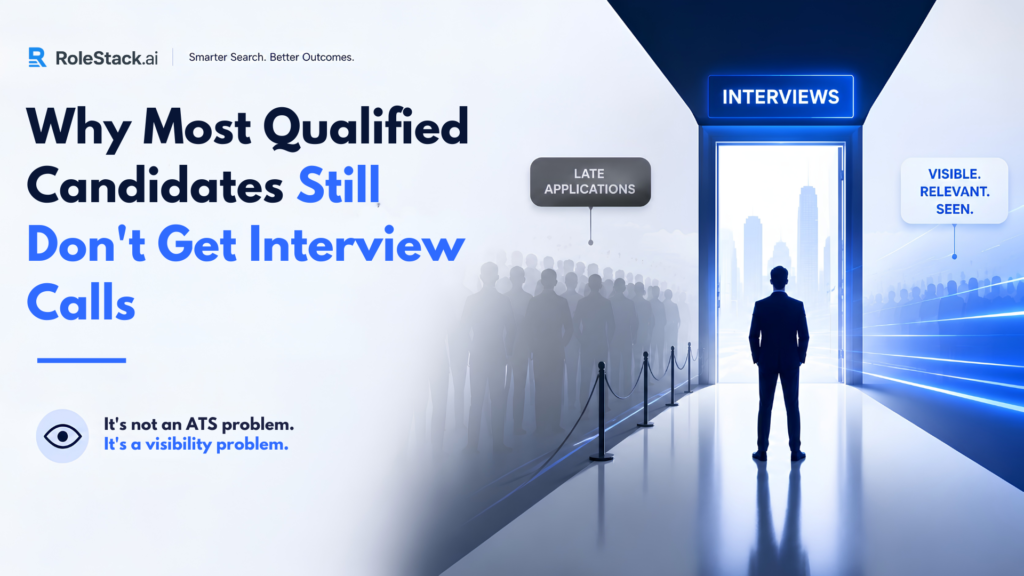
A better resume in a late slot, with the same generic framing everyone else used, still loses to an average resume that showed up early with a clear relevance signal. The system doesn’t reliably find the best person, it finds the most visible one at the right moment. Worth sitting with before you spend three hours perfecting a resume and submit it on day five.
RoleStack surfaces fresh job postings before they hit the big job boards, so you’re applying while it still matters instead of after the queue fills up. Explore RoleStack →
Sources:
- 2026 Job Application Statistics — HiringThing
- ATS Statistics 2026: The ‘75% Rejection’ Stat Is Fake — ResumeAdapter
- Does the ATS Reject Your Resume? 25 Recruiters Explain What Really Happens — Enhancv
- Debunking the ATS Rejection Myth — HR Gazette
- Interview Rate per Application Statistics for 2026 — Onehour Digital
- What Is a Good Job Application Response Rate in 2026? — Uppl.ai
- State of Resume Tailoring 2026 — TailorForge
- 25+ Crucial Job Interview Statistics — High5Test