I went looking for disagreement. When you read enough hiring reports you expect the usual spread of vendor spin and contradictory predictions, and there’s plenty of that. But underneath it, every recent survey of recruiters lands on the same fact, and it’s a bigger deal than the trend pieces make it sound.
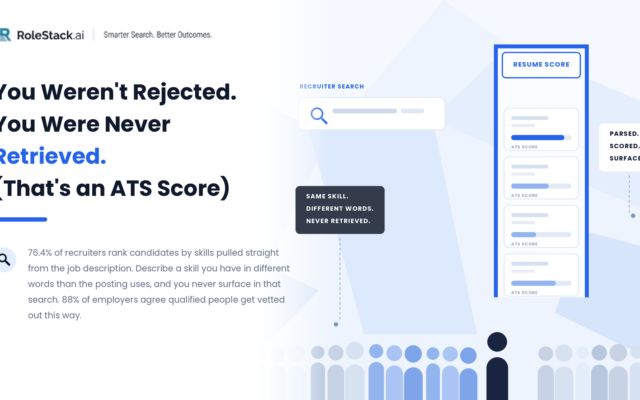
The first read of your application is no longer done by a person.
When Resume Now surveyed more than 900 US hiring professionals, 96% said they now use AI in at least some part of recruiting, screening and resume analysis included (Resume Now via The Interview Guys). SHRM’s 2025 data has 43% of organizations using AI for HR tasks, up from 26% a year earlier, with a big chunk of that pointed straight at resume screening (SHRM). LinkedIn’s Future of Recruiting report has 74% of talent professionals saying AI makes hiring more efficient (LinkedIn). Different samples, different questions, same direction. The machine reads first now, and it happened fast.
This wasn’t a hype cycle, it was triage
The interesting part isn’t that recruiters adopted AI. It’s why, because the why tells you what the future actually optimizes for.
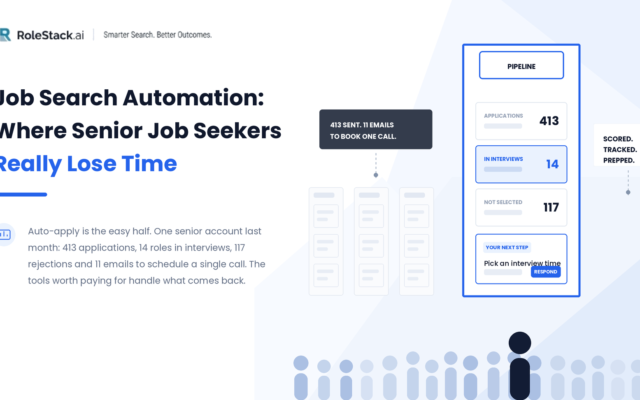
Do the arithmetic a recruiter is quietly staring at. Applications now run around 250+ per posting, and Ashby’s analysis of over 109 million applications found every hire in 2025 took more than 300 of them (Ashby). One 2026 analysis clocked the average posting at 257.6 applications, up from 207.2 in 2024 (CoverSentry). Now give that recruiter fifteen open roles. At a few minutes a resume, reading everything before a single conversation would eat something like five straight work weeks. Nobody has five weeks. So they either read a thin skim of the pile, which is the old broken system, or they hand the first pass to a model. Given that choice, 96% picked the model.
That reframes the whole “future of hiring” conversation. AI didn’t win because it’s better. It won because the volume broke the human option, and it broke the human option because applying got nearly free at the exact moment AI started writing the applications too. Which is where it gets strange.
Both sides automated, so the old signal is dying
Candidates now use AI to generate and tailor resumes in seconds. Recruiters use AI to screen them. So a growing share of hiring is one model writing a document for another model to rank, with two anxious humans hoping their bot represented them well. There’s early testing suggesting AI screeners even rate AI-written resumes more highly than human-written ones, which, if it holds up, is a genuinely funny place for the industry to have arrived at.
Step back and the consequence is bigger than the comedy. When everyone can generate a perfect keyword match for free, the keyword match stops meaning anything. The signal that carried resume screening for twenty years — does this document contain the right words — is being inflated to worthlessness, the same way a currency dies when you print enough of it. And when a cheap signal collapses, reviewers don’t stop needing signal. They reach for the expensive ones the machine can’t fake: proof of specific impact, a referral from someone they trust, evidence you understood this particular role, quality of hire over quantity of applicants.
You can already see recruiters groping toward that. LinkedIn found 89% of talent pros say measuring quality of hire is increasingly important, but only 25% feel confident their organization can actually do it (LinkedIn). That gap is the whole story of the next few years. Everyone wants to hire the best person and nobody can define or measure “best,” so they fall back on proxies for trustworthiness. This is exactly why referrals, pedigree, and exact-fit keep punching above their weight: they’re crude stand-ins for a “quality” nobody can measure directly.
The honest counterpoint
It’s tempting to file all of this under dystopia, resume-eating robots and so on, but I don’t think that’s quite right, and the steelman matters.
A tired human giving your resume six seconds at 4pm is not obviously fairer than a model. The better screening tools now read the whole document, not just the top third, and weigh context, consistency, and measurable impact rather than whether you went to the right school. In principle that could surface strong candidates the human skim was missing, and cut some of the halo-effect bias humans carry in without noticing. That’s the optimistic case, and it’s not nothing.
The pessimistic case is just as real. Models inherit the biases of what they were trained on, they can be gamed by whoever reverse-engineers them fastest, and “reads the whole document” is only good if the thing it learned to reward actually correlates with doing the job. Both futures are live right now, and which one you get depends heavily on the specific tool in front of your specific application. That uncertainty is the actual state of the art, and anyone selling you a cleaner story is selling you something.
What it means if you’re the one applying
Strip out the forecasting and the practical shift is simple. Writing for a human reader’s six-second skim was the old game. The new one is being legible to a model and trustworthy to the person who reads whatever the model surfaces. Those aren’t the same skill, and most job-search advice is still teaching the first.
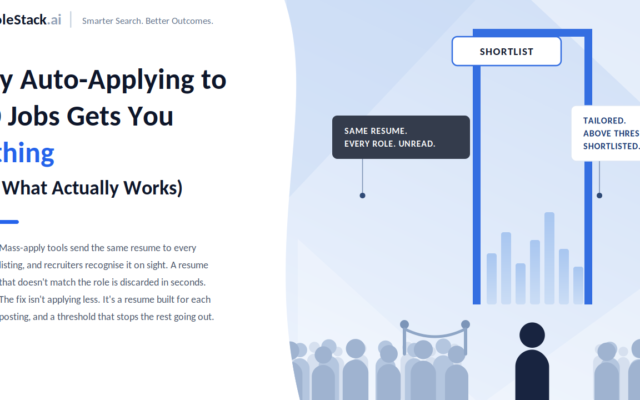
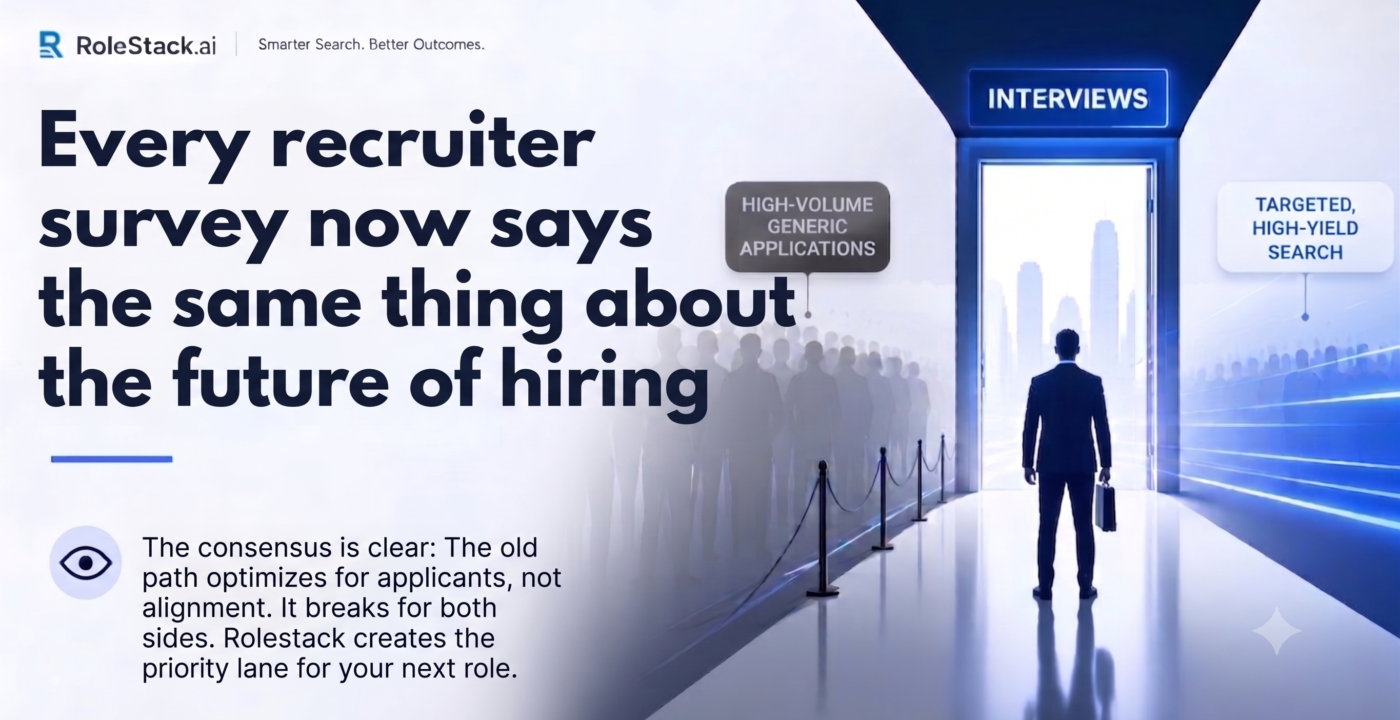
Concretely, that means proof over adjectives, because a model weighing measurable impact doesn’t care that you’re “results-driven,” it cares that you shipped the thing two weeks early. It means matching the specific role rather than broadcasting a generic profile into fifty AI screeners that will all quietly rank you mid. It means getting in while a human is still reading carefully, because the machine sorts the pile but a person still makes the call at the end. And it means the referral, still, because a trusted human vouch is the one signal no model on either side can manufacture.
None of that is a hack. It’s just what’s left that means something once the cheap signals inflate away. The resume isn’t dead. It’s being demoted from the thing that impresses a person to the thing that has to survive a machine and then earn a human’s trust in the same thirty seconds it always did.
That’s the narrow problem RoleStack works on: surfacing high-fit roles early, before the pile and the screeners fill up, and tailoring each application so it reads as an obvious match to whatever’s doing the first read. It won’t write you a referral or fix a broken market. But in a world where a model sees you before a person does, being early and legible is most of the game. Try RoleStack for Free Today
Sources:
- The State of AI in Job Interviews 2026 (Resume Now, 900+ hiring pros) — The Interview Guys
- The Future of Recruiting (quality of hire, AI efficiency) — LinkedIn
- 2025 Talent Trends / AI adoption in HR — SHRM
- Talent Trends Report (300+ applications per hire) — Ashby
- AI in Hiring Statistics 2026 (applications per posting) — CoverSentry