The rise of AI has changed how people search for jobs.
What once took hours of searching, filtering, and filling out applications can now be automated in minutes.
On the surface, that’s a win.
But there’s an important question most job seekers never ask:
What exactly is being automated?
Because not all automation creates better outcomes.
Some tools are designed to maximize one metric:
Applications sent.
The best tools optimize for something entirely different:
Interviews earned.
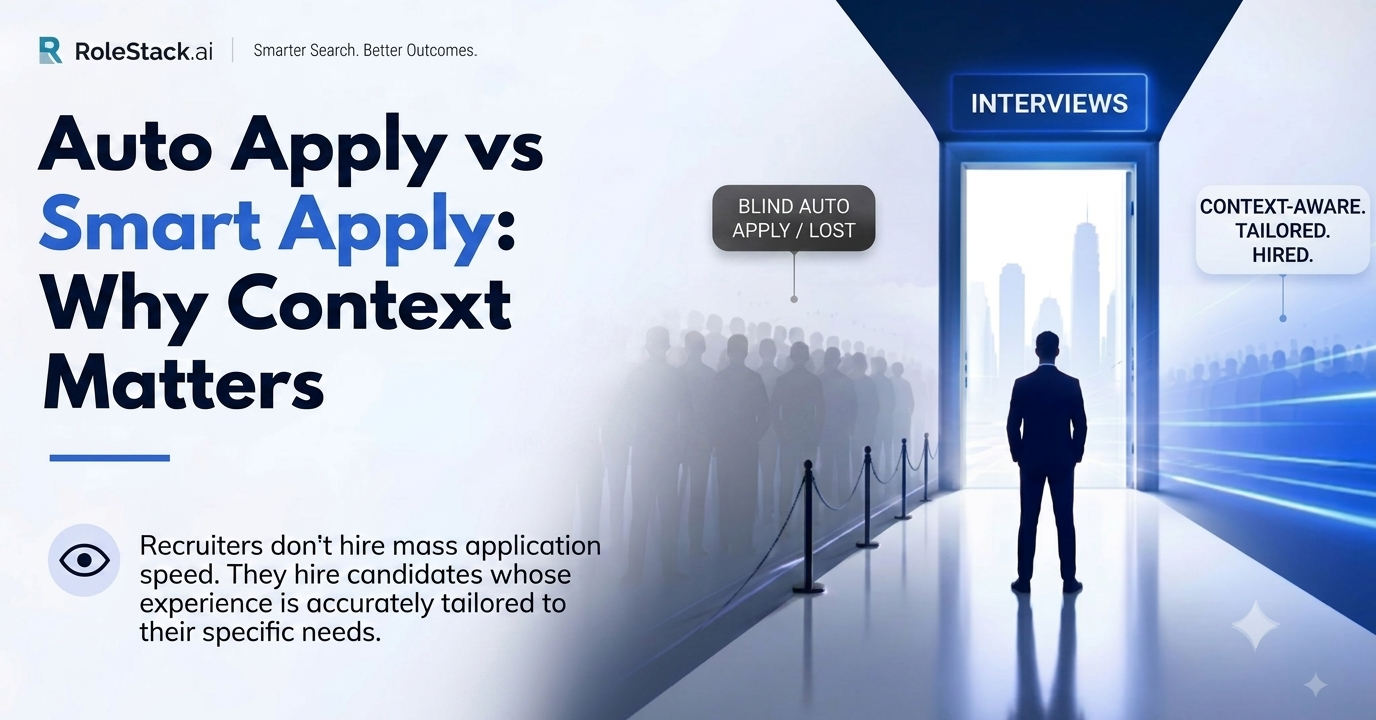
That’s the difference between Auto Apply and Smart Apply.
One automates clicks.
The other automates strategy.
The Problem with Traditional Auto Apply
Auto-apply tools became popular because they solved a real problem.
Applying for jobs is repetitive.
You upload the same resume.
Fill in the same information.
Answer the same questions.
Repeat.
It’s understandable why candidates want software to handle that busywork.
But many auto-apply platforms stop there.
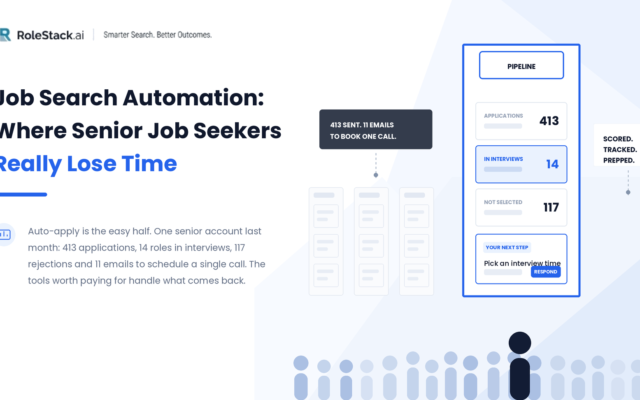
They send the same resume to dozens or even hundreds of openings with little consideration for whether those jobs are actually a good match.
At first glance, the numbers look impressive.
- 250 applications sent.
- 500 jobs applied to.
- Thousands of clicks saved.
But there’s a hidden question behind those metrics:
How many interviews did those applications actually generate?
Because recruiters don’t reward volume.
They reward relevance.
Why More Applications Don’t Always Mean More Interviews
Imagine two candidates.
Candidate A
- Applies to 300 jobs in a month.
- Uses the same resume every time.
- Applies regardless of how well the role matches their experience.
Candidate B
- Applies to 80 carefully selected jobs.
- Tailors every resume.
- Prioritizes fresh opportunities.
- Applies within the first 48 hours.
Who is more likely to receive interview invitations?
Most recruiters would choose Candidate B.
Not because they applied more.
Because they applied smarter.
Hiring isn’t a lottery.
It’s a matching problem.
The Missing Ingredient: Context
The biggest limitation of traditional automation is that it ignores context.
Every job posting is different.
Every company values different experiences.
Every hiring manager has different priorities.
Treating every application the same assumes every opportunity is identical.
They aren’t.
Context includes questions like:
- Does this role align with your experience?
- Are your strongest achievements visible?
- Are you applying while the position is still fresh?
- Does your resume speak the language of the job description naturally?
- Does the role fit your career goals?
Without context, automation becomes little more than a faster way to submit generic applications.
What Smart Apply Looks Like
Smart Apply starts with a different objective.
Instead of asking:
“How can we automate applications?”
It asks:
“How can we improve every application while removing repetitive work?”
That shift changes everything.
A Smart Apply workflow should help candidates:
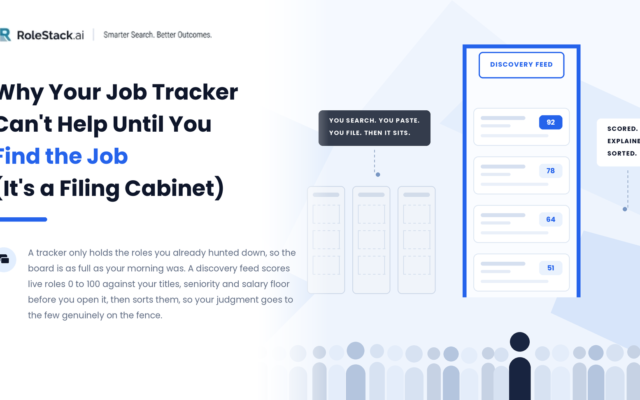
Discover Fresh Opportunities
Timing is one of the biggest competitive advantages in hiring.
Applying within the first 24 to 48 hours often means competing with fewer applicants and reaching recruiters while they’re actively building their candidate pipeline.
Match Jobs Intelligently
Not every opportunity deserves an application.
Strong matching considers experience, skills, seniority, industry, and career direction before recommending a role.
Tailor Every Resume
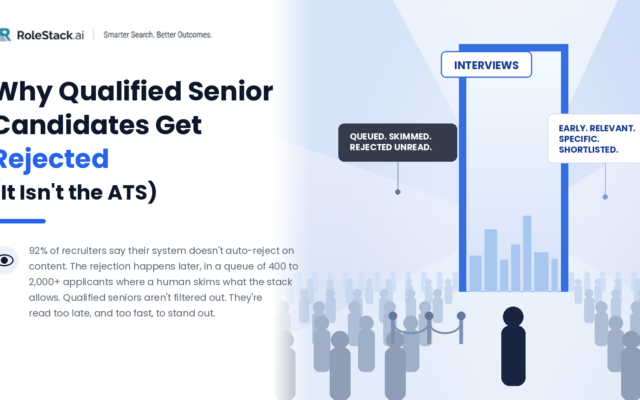
Recruiters spend only seconds scanning resumes.
A tailored resume helps them quickly understand why you’re relevant without changing your experience or exaggerating your qualifications.
Keep Humans in Control
Automation should remove repetitive tasks.
It shouldn’t remove judgment.
The best job search decisions, such as which opportunities align with your career goals, still belong to you.
Why Context Improves Recruiter Response Rates
Recruiters don’t evaluate resumes in isolation.
They evaluate them against a specific role.
That means relevance matters more than completeness.
A resume that highlights enterprise SaaS experience may perform exceptionally well for one opening and poorly for another.
Neither resume is objectively better.
One simply provides better context.
That’s why tailoring works.
Not because it tricks an ATS.
Because it helps recruiters recognize your fit faster.
Automation Should Improve Quality, Not Just Speed
The first generation of job search automation focused on reducing effort.
The next generation focuses on improving outcomes.
That means measuring success differently.
Instead of asking:
- How many applications were sent?
Ask:
- How many interviews were earned?
- How relevant were the applications?
- How quickly were fresh jobs discovered?
- How much repetitive work was eliminated?
Those are the metrics that actually matter.
How RoleStack Approaches Smart Apply
At RoleStack, we believe job searching is fundamentally a systems problem.
The goal isn’t to apply everywhere.
It’s to apply strategically.
That’s why RoleStack is built around four principles:
1. Discover Fresh Jobs Early
RoleStack continuously monitors company career pages and leading Applicant Tracking Systems, including Workday, Greenhouse, Lever, Ashby, and SmartRecruiters, helping users discover opportunities soon after they’re published.
2. Match Relevant Opportunities
Instead of encouraging mass applications, RoleStack prioritizes jobs that align with your skills, experience, and career goals.
3. Tailor Every Application
Every application receives a resume tailored to the specific role, helping recruiters immediately understand why you’re a strong fit while keeping your experience authentic.
4. Automate the Busywork
Searching, organizing, and preparing applications consumes hours every week.
RoleStack automates those repetitive tasks so candidates can focus on the decisions that require human judgment.
That’s not blind automation.
That’s intelligent automation.
The Future of Job Search Isn’t More Automation
It’s Better Automation.
As AI continues to reshape hiring, job seekers will have access to increasingly powerful tools.
The winners won’t be the platforms that submit the most applications.
They’ll be the platforms that help candidates make better decisions.
The future belongs to systems that combine:
- Fresh job discovery.
- Intelligent matching.
- Personalized applications.
- Human oversight.
Because technology should amplify good strategy.
Not replace it.
Final Thoughts
The debate isn’t between manual applications and automation anymore.
It’s between generic automation and intelligent automation.
One optimizes for activity.
The other optimizes for outcomes.
If your goal is simply to send more applications, almost any auto-apply tool can help.
If your goal is to earn more interviews, context becomes your competitive advantage.
Every application tells a story.
The question isn’t whether AI should write that story.
It’s whether AI can help tell your story in the right context, at the right time, to the right recruiter.
That’s the difference between Auto Apply and Smart Apply.
And it’s why context will always matter.