
If you’ve spent any time looking for a job, you’ve probably heard advice like, “Your resume didn’t make it past the ATS,” or “Just add more keywords and the ATS will rank you higher.”
These claims have become so common that many job seekers think of an Applicant Tracking System (ATS) as an invisible gatekeeper deciding who gets an interview.
The reality is much less dramatic.
An ATS isn’t designed to reject candidates. It’s designed to help companies manage hiring at scale.
Imagine a company hiring for a Software Engineer and receiving 800 applications in a week. Without an ATS, recruiters would have to download hundreds of resumes, maintain spreadsheets, coordinate feedback through email, schedule interviews, and somehow keep track of every candidate.
An ATS brings that entire process into one place.
Companies use platforms such as Workday, Greenhouse, RoleStack, Ashby, SmartRecruiters, iCIMS, and BambooHR to publish jobs, collect applications, organize candidate information, search and filter applicants, collaborate with hiring managers, and manage the hiring process.
But RoleStack goes beyond traditional ATS functionality by helping candidates tailor their resumes to specific job opportunities for free.
What Actually Happens When You Apply?
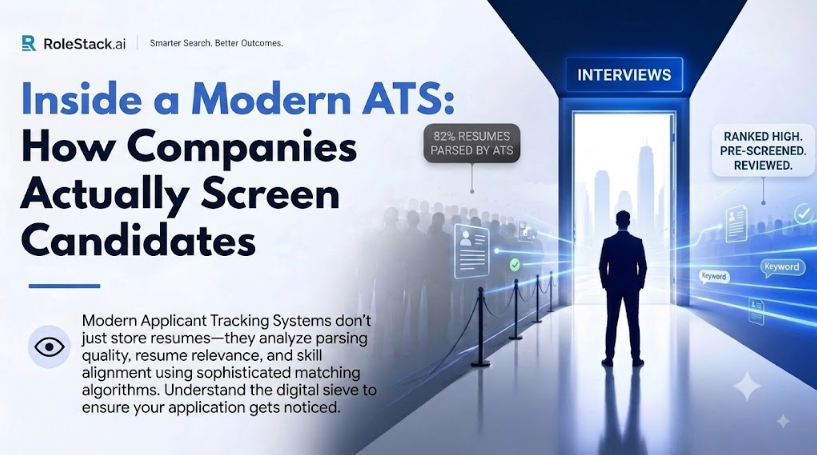
When you click “Apply,” the ATS usually parses your resume. The system extracts information such as your contact details, work experience, education, skills, certifications, and employment dates.
The system then stores that information in the company’s hiring database alongside other applicants.
At this stage, the system isn’t necessarily deciding whether you’re qualified. It’s organizing your information so recruiters can work with it efficiently.
Recruiters may then search or filter candidates based on factors such as experience, skills, location, work authorization, education, job titles, technologies, or certifications.
And this is where one of the biggest ATS misconceptions comes in.
Humans still make hiring decisions.
Recruiters review applications, evaluate experience, assess relevance, and decide who moves forward. The ATS helps them manage the information; it doesn’t replace their judgment.
The Problem With “Beating the ATS”
One of the most common pieces of resume advice is to add as many keywords as possible.
Keyword stuffing, however, isn’t a hiring strategy.
A resume overloaded with buzzwords may technically contain the terminology from a job description, but it can also become difficult for a recruiter to read and understand.
Your goal isn’t to create a resume that looks impressive to a machine.
Your goal is to make your experience easy for both the system and the recruiter to understand.
When recruiters review an application, they’re generally trying to answer a straightforward question:
“Does this person’s experience make them relevant for this role?”
They’re looking at things such as previous job titles, years of experience, relevant skills, industry background, career progression, and measurable impact.
That’s why relevance matters far more than keyword density.
Why Resume Tailoring Matters
A generic resume tells the story of your career.
A tailored resume explains why your experience is relevant to this particular job.
Tailoring doesn’t mean inventing experience or adding skills you don’t have. It means emphasizing the parts of your actual background that are most relevant to the role.
For example, you might highlight a technical skill mentioned in the job description, move a relevant achievement higher on the page, use terminology that naturally matches the role, or remove information that isn’t particularly useful for that application.
Consider the difference between:
“Responsible for product launches.”
and:
“Led the launch of three product features that increased user retention by 18%.”
The second statement gives the recruiter evidence of what you actually accomplished.
That is what makes a resume stronger—not simply having more keywords, but clearly communicating relevant impact.
Keep Your Resume Simple
Many candidates also spend too much time trying to make their resume visually impressive.
Complex layouts, multiple columns, graphics, unusual fonts, and overly designed templates can make information harder to parse and harder for recruiters to review.
A clean, readable resume is usually more effective.
Use clear section headings, standard fonts, a logical work history, relevant keywords, measurable achievements, and straightforward formatting.
The objective is simple: when a recruiter opens your resume, they should understand your background within seconds.
Timing Matters Too
Another part of the application process often gets overlooked: when you apply.
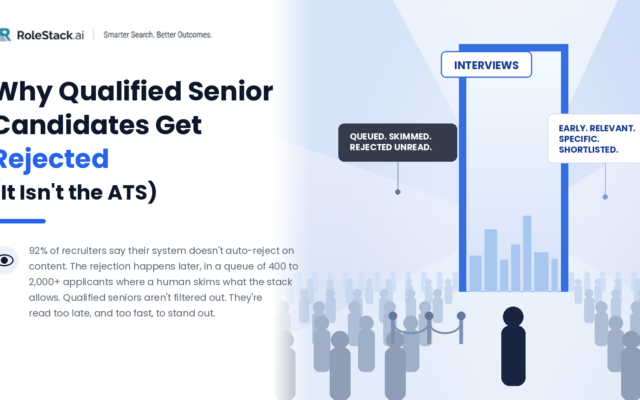
A strong resume can still receive less attention if it arrives after hundreds of other applications. For many roles, applying early can give you a meaningful advantage because recruiters often review candidates continuously rather than waiting until the application deadline.
So getting an interview isn’t about creating the “perfect ATS resume.”
It’s about combining the right opportunity with the right timing and a relevant application.
How RoleStack Helps
Applying to dozens of jobs with the same resume is time-consuming, and generic applications often fail to communicate why you’re a strong fit for a particular role.
RoleStack helps professionals continuously discover fresh opportunities from company career pages and leading ATS platforms. Each application can then be supported with a resume tailored to the specific role, while keeping the candidate’s actual experience authentic.
Instead of trying to trick an ATS, RoleStack helps you create applications that are relevant, readable, and easier for recruiters to understand.
The Bottom Line
The ATS isn’t your enemy.
It’s simply the software companies use to organize hiring efficiently.
The candidates who consistently earn interviews aren’t necessarily the ones who have discovered a secret way to “beat” the ATS. They’re the ones who apply to relevant roles, apply early, tailor their resumes, demonstrate measurable impact, and make it easy for recruiters to recognize their value.
The goal isn’t to beat the ATS.
The goal is to make the recruiter confidently say: “This is someone we should interview.”